
You probably didn’t get into business to think about web accessibility law. Neither did the owner of a Kansas City deli. Or an ice cream shop. Or a beloved local jazz museum. Or a St. Joseph cafe.
And yet, in recent years, all of them have found themselves on the receiving end of a demand letter — or a lawsuit — over their websites.
This is the reality for small businesses and organizations across Missouri right now. And if it hasn’t landed in your inbox yet, that doesn’t mean it won’t.
What’s happening
Missouri has become one of the fastest-growing states for ADA website accessibility litigation.
In 2025 alone, 85 lawsuits were filed against Missouri businesses… more than double the 35 filed the year before. Targets have included restaurants, retail shops, delis, nonprofits, and cultural institutions. Many of these businesses had no idea their websites posed any legal exposure at all.
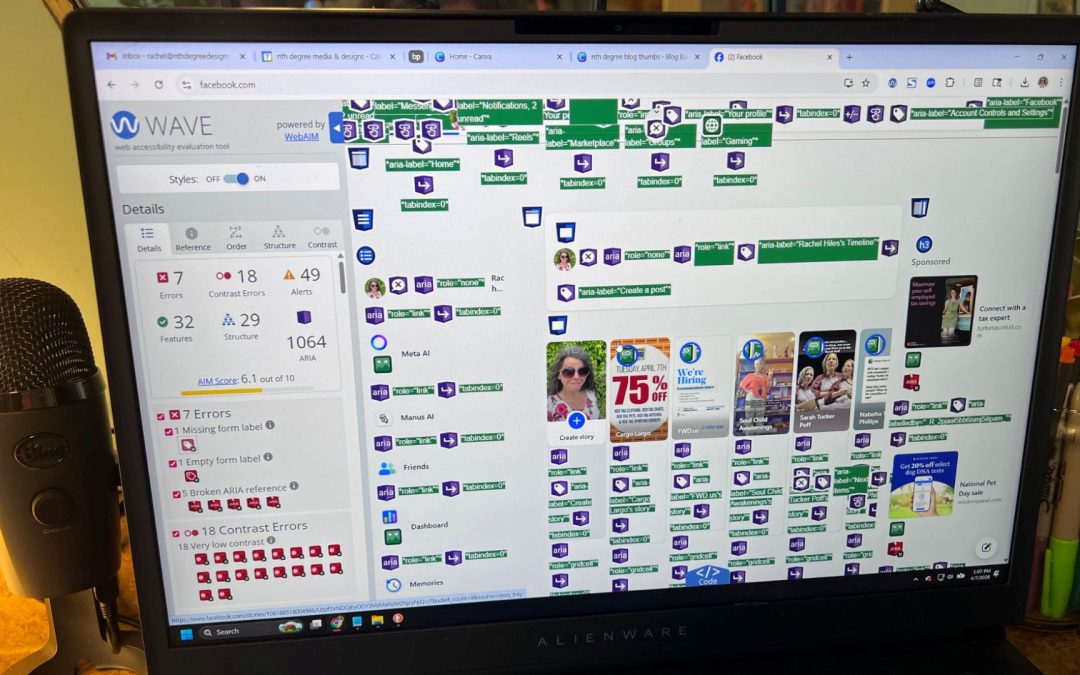
The lawsuits typically follow a pattern: a plaintiff, often represented by the same attorney, filing dozens or even hundreds of nearly identical complaints, alleges that a business website is incompatible with screen reader technology, blocking people with visual disabilities from equal access to goods and services.
The cases rarely go to trial. Instead, they settle quickly, usually for somewhere between $5,000 and $40,000. Most of that money goes to the lawyers, not to the people with disabilities the suits claim to represent.
Missouri lawmakers have taken notice. The Act Against Abusive Website Access Litigation, a package of bills designed to give businesses 90 days to address issues before a suit can proceed, passed the Missouri House in February 2026 and is now awaiting action in the Senate. A federal version, the ADA 30 Days to Comply Act, has also been introduced in Congress.
Before we go further, a necessary pause…
It would be easy to read all of this and conclude that website accessibility lawsuits are nothing more than a legal shakedown… predatory attorneys exploiting small businesses over technicalities. And in many of these cases, that characterization isn’t entirely wrong.
But here’s what I can’t let you walk away thinking: the barriers aren’t real.
When a website isn’t compatible with a screen reader, a person who is blind cannot use it.
When a video has no captions, a person who is Deaf is excluded.
When a form has no proper labels, someone using assistive technology hits a wall.
These aren’t technicalities. They are the everyday experience of millions of people navigating a digital world that wasn’t built with them in mind.
The frustrating truth is that predatory litigation and genuine inaccessibility exist at the same time, in the same lawsuits.
You can think the legal tactics are wrong and still take the underlying problem seriously. In fact, I’d argue that’s exactly the right response.
This isn’t just a legal problem.
Here’s the thing about the “sue and settle” wave: it’s targeting businesses that were already out of compliance. The lawsuits are scandalous, but the violations are real.
An attorney with a scanner and a business model didn’t create inaccessible websites… we did, collectively, by building the web without access in mind from the start.
More than 1 in 4 adults in the U.S. lives with some form of disability.
That’s not a niche audience. They are your customers, your donors, your constituents, your community. An inaccessible website isn’t just a legal liability… it’s a locked door.
The good news is that accessibility is fixable. It’s learnable. And starting from a place of genuine commitment to inclusion is a much stronger position, legally and ethically, than scrambling to avoid a lawsuit.
What’s coming in this series
Over the next few weeks, we’re going to dig into all of it: the compliance deadline that’s already here for many public entities, why AI-powered “quick fix” tools are giving people a false sense of security, how to actually test your website, and what accessible design looks like in practice.
If you’ve been putting this off, now is the time to stop.
Not because of the lawsuits (though those are real), but because access matters.
And because building it in from the start is a whole lot easier than cleaning it up after the fact.
Next Up:
The ADA Title II Rule on Web Content and Mobile Apps: what it requires, who it applies to, and what the deadline actually means.


 EN
EN  ES
ES