
Most people assume web accessibility law is someone else’s problem. A big corporation’s problem. A federal agency’s problem. Something that applies to faceless institutions with legal departments and compliance officers… not to a local nonprofit, a small city, a county library, or a regional service organization.
That assumption is no longer safe to make.
In April 2024, the U.S. Department of Justice issued its final rule under Title II of the Americans with Disabilities Act, establishing clear, enforceable digital accessibility standards for state and local government entities.
After decades of legal ambiguity about what exactly the ADA required in the digital space, the rule provides a specific technical standard, a specific scope, and specific deadlines.
Those deadlines are here.
What are the deadlines?
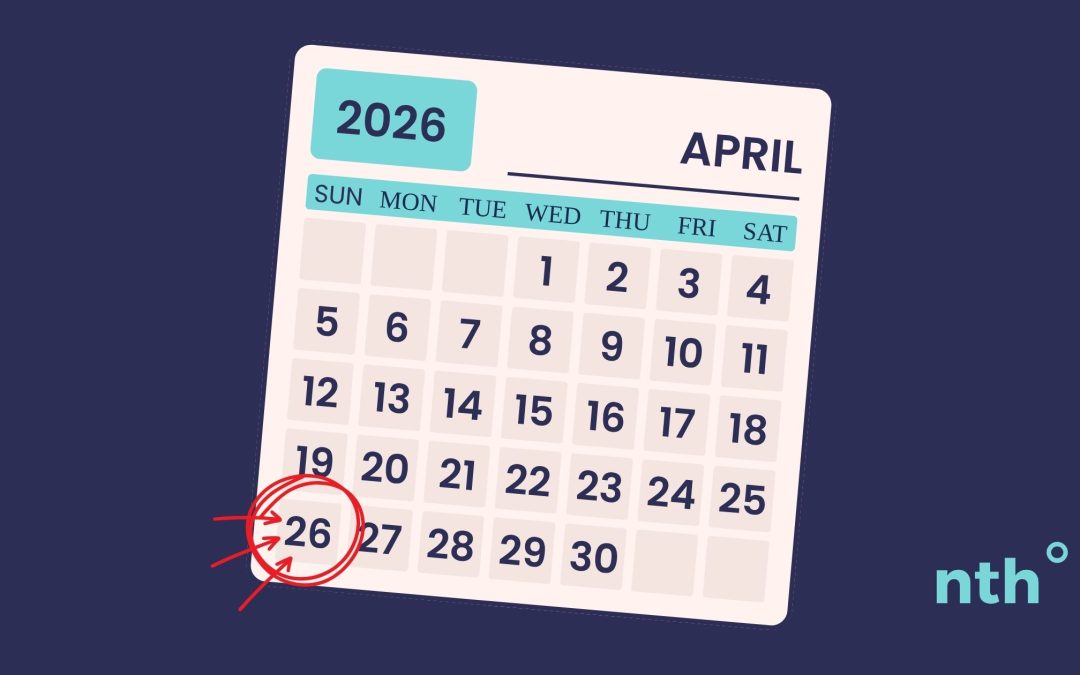
- April 26, 2026: Public entities serving populations of 50,000 or more
- April 26, 2027: Public entities serving populations of fewer than 50,000, and all special district governments regardless of size
If you’re reading this in April 2026, the first deadline is essentially now. If your organization serves a population of 50,000 or more and hasn’t begun working toward compliance, you are already behind.
For smaller entities, April 2027 may feel like breathing room, but a full accessibility audit and remediation process takes time. Months, not days. Starting now is not early. Starting now is smart.
Who does this apply to?
Title II of the ADA covers state and local government entities, what the rule calls “public entities.”
That includes:
- State and local government agencies
- Cities, counties, and townships
- Public school districts and public universities
- Public libraries
- Transit authorities and special districts
- Any program, service, or activity offered by a public entity, including those delivered online
If your organization falls into any of these categories, this rule applies to you directly.
If you’re a vendor, web developer, designer, or consultant who works with these organizations, this rule affects your clients… and by extension, your work.
Private businesses and nonprofits are not covered by Title II specifically. They fall under Title III of the ADA, which has its own body of case law and its own litigation landscape, which we covered in the first post in this series. But the direction of compliance is the same, and courts have consistently applied accessibility requirements broadly across both titles.
What does it require?
The rule establishes a specific technical standard: WCAG 2.1, Level AA, the Web Content Accessibility Guidelines, developed by the World Wide Web Consortium. Meeting this standard is what compliance looks like.
WCAG 2.1 AA is organized around four core principles, sometimes called POUR:
Perceivable: Information and interface elements must be presentable in ways users can perceive. This means things like alt text for images, captions for videos, and sufficient color contrast between text and background.
Operable: Users must be able to navigate and interact with the interface. This includes keyboard navigation for users who can’t use a mouse, enough time to complete tasks, and avoiding content that could trigger seizures.
Understandable: Content and navigation must be understandable. This means clear language, consistent navigation, helpful error messages in forms, and logical page structure.
Robust: Content must be interpretable by a wide range of assistive technologies, including screen readers, and must remain accessible as those technologies evolve.
These principles break down into specific, testable success criteria, 50 of them at Level A and AA combined. Some are technical. Some are design decisions. Some are content decisions. All of them matter.
The rule applies to websites, mobile apps, and (with some narrow exceptions) the full range of digital content a public entity provides or posts.
What about exceptions?
The rule includes a handful of narrow exceptions worth knowing:
- Archived content: Digital content created before the compliance deadline, kept exclusively for reference or recordkeeping, stored in a clearly marked archive, and not updated after archiving is exempt.
- Preexisting conventional electronic documents: PDFs and other documents posted before the compliance deadline that aren’t used to apply for or access services are exempt, though new documents going forward are not.
- Third-party content: Content posted by members of the public on their own initiative (like a comment on a government Facebook page) is not the entity’s responsibility.
- Undue burden: Entities may claim an exception if compliance would require significant difficulty or expense, but this is a high bar and requires documented justification.
These exceptions are narrow. They are not a workaround. An organization that interprets them broadly as permission to delay genuine compliance work is misreading both the letter and the intent of the rule.
What this means in practice
For public entities, compliance isn’t optional and it isn’t theoretical. The DOJ can enforce the rule directly, and individuals can file complaints. Failure to comply is a civil rights issue, not just a regulatory technicality.
But beyond the legal obligation, there’s a more fundamental point. Government services (permits, benefits, transit information, public health resources, emergency alerts, school communications) are things people depend on.
When those services are delivered through inaccessible digital channels, people with disabilities are denied equal access to the functions of civic life. That’s what the rule is trying to correct.
For the vendors, designers, and consultants who support public entities: if you are building or maintaining websites and digital content for government clients, WCAG 2.1 AA compliance is now a baseline requirement of the work. Not an add-on. Not an upgrade. The baseline.
A note on WCAG 2.2
While WCAG 2.1 AA is the legal standard under this rule, WCAG 2.2, the most current version, was published in 2023 and includes additional success criteria, particularly around mobile usability and cognitive accessibility.
Building to 2.2 where possible is good practice and helps future-proof your digital content as standards continue to evolve. It’s worth knowing about even if it isn’t yet the legal requirement.
Where does your organization stand?
If you aren’t sure whether your website meets WCAG 2.1 AA, the honest answer is that it probably doesn’t, not fully.
Most websites don’t, including many that belong to organizations with good intentions and real commitment to inclusion.
The gap between intent and compliance is exactly what this series is designed to help close.
Coming up, we’ll get into the tools you can use to find out where you stand… and what accessible design actually looks like in practice.
Next up: why AI-powered overlays and “one line of code” fixes are giving organizations a false sense of security… and what genuine compliance actually requires.
DISCLAIMER: This is not legal advice and I am not a legal professional.


 ES
ES  EN
EN