
What being a one-woman show has taught me (and what I’d do differently if I started over)
When I first started my business, I thought being “solo” just meant doing the work myself. Turns out, it’s so much more than that.
Running a creative business alone means being the visionary, the worker bee, the bookkeeper, the cheerleader, the decision-maker, and sometimes… the tech support at 10 p.m.
It’s taught me a lot. Some lessons I’ve learned the hard way, others through trial, error, and quiet wins.
If you’re running your business solo (or thinking about it), here’s what I’ve learned along the way:
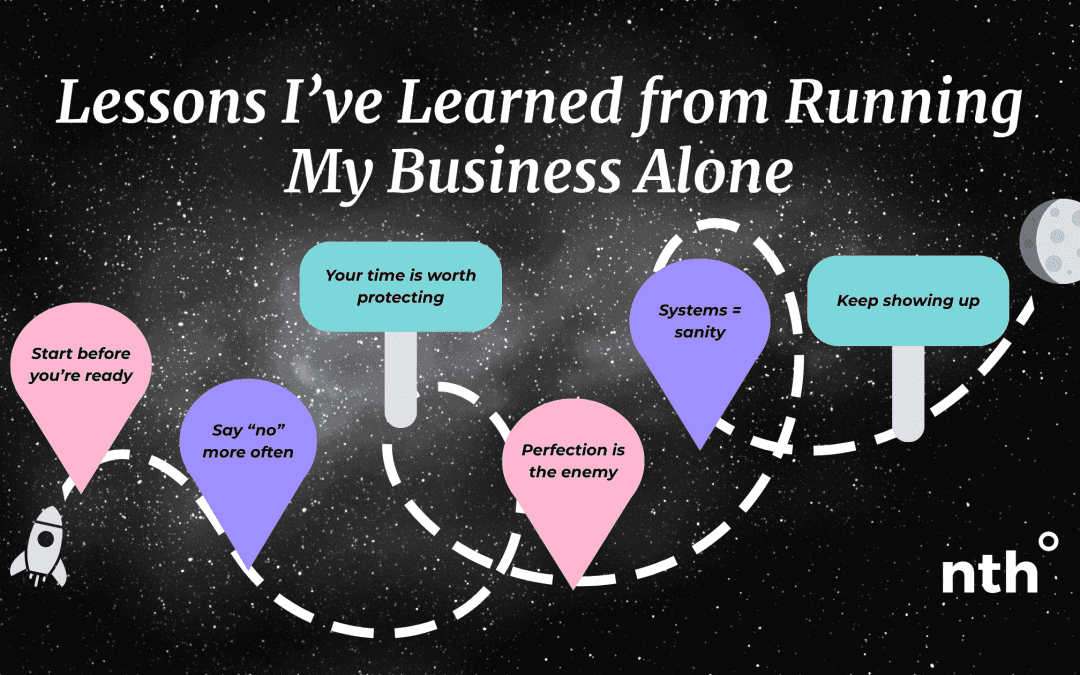
1. Boundaries Are Everything (and They Take Practice)
At first, I said yes to every client, every meeting, every “quick” request.
I was afraid of missing out, afraid of letting people down, afraid of sounding “unprofessional” for having limits.
Now? I block out Wednesdays and Thursdays for client work and don’t take meetings those days.
I’ve learned that boundaries aren’t barriers… they’re what allow me to show up fully for the work I care about.
2. Burnout Doesn’t Always Look Like a Breakdown
Sometimes burnout is subtle. It looks like:
- Avoiding your inbox
- Dreading projects you used to enjoy
- Being “productive” on paper but totally disconnected in practice
I’ve learned to pay attention to those early signals. To take breaks before I hit a wall. Even something as small as delivering Meals on Wheels once a week gives me a reset I didn’t know I needed.
3. You Can’t Wait for “Perfect” to Start Sharing
For way too long, I held back from posting, promoting, or putting my offers out there because I didn’t feel “ready.”
But clarity doesn’t come before action… it comes through action.
Done is always better than perfect. (And honestly, no one’s paying as much attention to that font size as you think.)
4. Systems = Sanity
I used to wing it with emails, proposals, timelines… until one day I realized my brain was exhausted from remembering everything.
Now I rely on tools like ClickUp, a to-do list on my phone and in my planner, and my email inbox to do the heavy lifting. I don’t need to remember every task, because the system already has my back.
Even a simple checklist can be the difference between chaos and calm.
5. Some Seasons Are Slow for a Reason
Not every month will be fully booked. Not every quarter will be your biggest yet.
But I’ve learned that the slow seasons often bring clarity.
They give me space to:
- Refine my offers
- Update my own branding
- Plan my content and marketing strategy
- Rest (even when it feels uncomfortable)
Busy isn’t always better. Growth often happens in the quiet.
6. The Right Clients Feel Like Collaborators, Not Bosses
I used to think I had to mold myself to fit every client’s expectations. Now, I know the best projects are mutual fits.
The right clients:
- Respect your process
- Trust your expertise
- Communicate clearly and kindly
- Make you feel excited to open their emails
It’s worth holding out for those people… and creating a brand and experience that attracts them.
7. Your Voice Is Your Superpower
When you’re a solo business, you are the brand. The more I lean into my actual voice—conversational, real, sometimes a little nerdy—the more I connect with the right people.
Trying to sound “professional” made me sound forgettable. Showing up as myself? That’s what builds trust.
8. You Don’t Need to Do Everything at Once
There’s always going to be more you could be doing. A new platform, a new offer, a course you “should” create, a trend to hop on.
I’ve learned to move at the pace of sustainability. To finish this thing before starting that one.
Spoiler Alert: You don’t fall behind when you move with intention… you build something that lasts.
TL;DR: Being a Solo Business Owner Is a Lot… and It’s Worth It
I’ve learned to:
- Say no without guilt
- Take up space without apology
- Trust my own process
- Ask for help when I need it
It’s not always easy, but it’s deeply meaningful work.
And if you’re doing it solo too? You’re not actually alone. We’re all figuring it out, one honest step at a time.
Want to see the tools or systems I mentioned?
Check out Tools I Can’t Live Without or drop your questions below. I love swapping stories with other creatives figuring it out as we go.

 ES
ES  EN
EN