
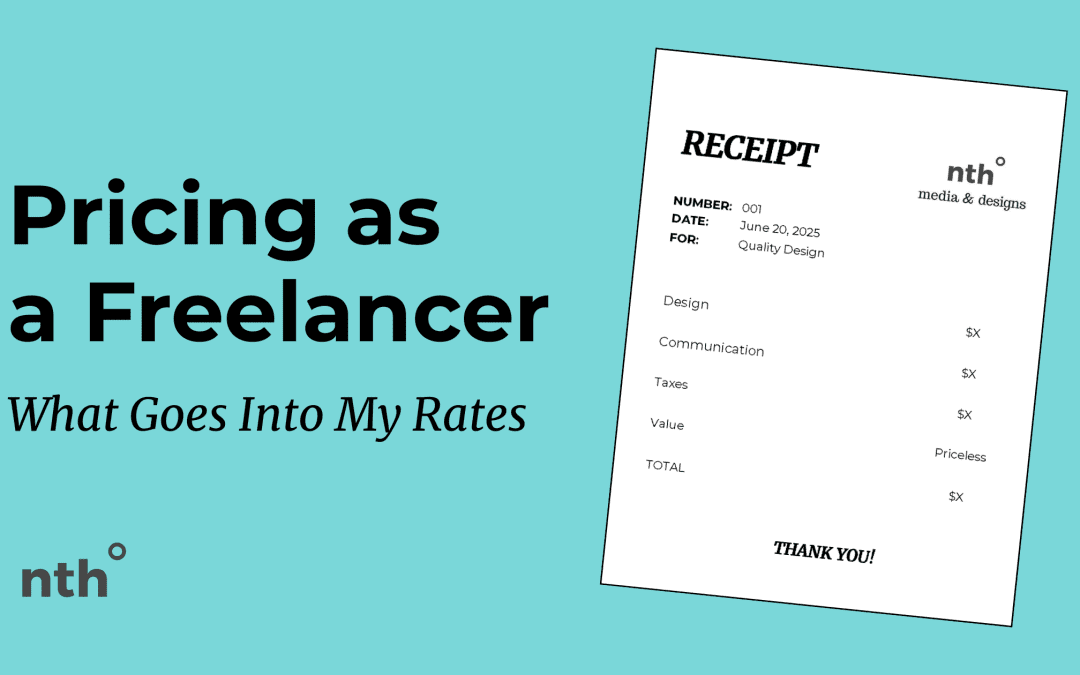
Spoiler: it’s not just the hours I’m designing.
If you’ve ever looked at a freelancer’s quote and thought, “That seems high for just a logo” or “Why does a website cost that much?” … you’re not alone.
But here’s the thing: freelance pricing isn’t just about the time spent clicking around in design software.
My rates are built around experience, value, time, tools, taxes, and the behind-the-scenes work that supports every single project.
Here’s what actually goes into my pricing… and why it’s designed to support both your success and mine.
1. Experience and Skill
You’re not just paying for my time. You’re paying for what I bring to the table: years of experience, creative problem-solving, and the ability to design quickly, clearly, and with intention.
A few hours of expert work can be far more valuable than dozens of hours spent piecing things together the hard way.
2. Prep and Planning Time
Before I open any design software, I’m:
- Asking strategic questions
- Researching your audience and competitors
- Reviewing your goals
- Organizing timelines and gathering content
This kind of upfront work is the foundation for good design… and it’s a crucial part of what you’re investing in.
3. Communication and Collaboration
Design projects aren’t just deliverables—they’re conversations. My rates include:
- Emails, check-ins, and feedback calls
- Time spent reviewing and implementing revisions
- Clear file handoffs and how-to guides so you’re not left in the dark
Good collaboration takes time and care, and I build that into every project.
4. Revisions and Refinement
Rarely is a project one-and-done. Most creative work goes through multiple drafts and edits. My pricing includes room for thoughtful feedback and refinement so we get it right, not just done.
5. Tools and Overhead
Running a solo business isn’t free. I regularly invest in tools that make your experience smoother and your project stronger:
- Design software (Adobe, Canva Pro)
- Stock images, fonts, and licenses
Project management tools - Client portals, contracts, file delivery systems
- Workspace essentials, equipment, and yes—plenty of coffee
6. Taxes and Self-Employment Costs
As a self-employed freelancer, I don’t just keep what I charge.
Around 30 percent of what I earn goes straight to Uncle Sam and the state where I live. Unlike traditional employees, I pay both the employer and employee share of Social Security and Medicare. I also cover my own health insurance, retirement contributions, and other benefits that are often baked into a full-time salary elsewhere.
My pricing has to account for these responsibilities to keep my business sustainable long-term.
7. Admin and Unseen Work
Behind every client project is a stack of invisible tasks:
- Writing proposals and contracts
- Invoicing and bookkeeping
- Marketing and website upkeep
- Scheduling and follow-up
This work keeps everything running and supports the smooth, responsive service I give my clients.
8. Value Over Time
You’re not just paying for a few hours of work.
You’re investing in:
- A brand or website that connects with your audience
- Tools that support your business goals
- A look and feel that builds trust and recognition
If your logo or website serves you for years, that’s long-term value that goes way beyond the initial project.
The Bottom Line
My rates reflect the full picture: the expertise, strategy, design time, revisions, tools, taxes, and care I pour into every project.
It’s not about charging the bare minimum.
It’s about building a creative business that delivers real value, puts people first, and runs in a way that’s healthy and sustainable.
Curious about what goes into a quote or what’s right for your budget?
Let’s talk. I’ll walk you through the process, answer your questions, and make sure you know exactly what you’re getting.


 EN
EN  ES
ES